

Sovereign Digital Identity, Global KYC Access, and Emerging Private Infrastructure
Table of Contents
The global financial system is quietly fragmenting.
KYC regimes are tightening. Access is narrowing. Entire classes of people—particularly U.S. persons, administrators, and sovereignty-minded operators—are being pushed into fewer compliant lanes.
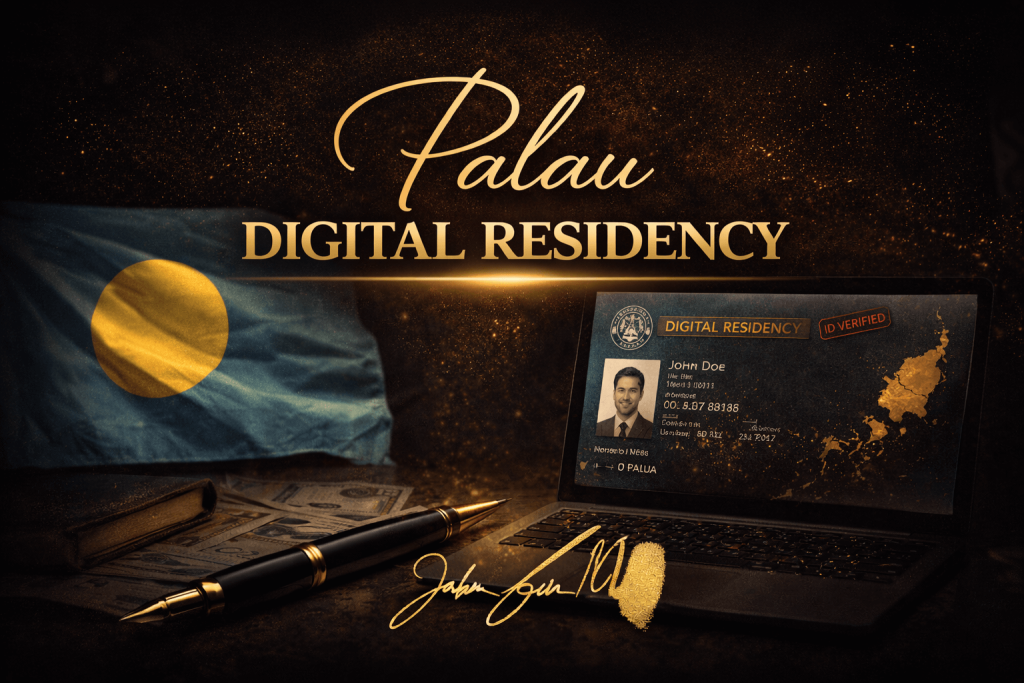
Palau’s Digital Residency Program is one of the first legitimate, government-issued alternatives to emerge in this environment.
This is not a workaround.
This is not a loophole.
This is a state-issued sovereign digital identity framework designed for a borderless world.
And we are early.
I’ve written extensively on Palau’s role in emerging sovereign infrastructure long before its digital residency program and private banking initiatives entered broader public awareness.
What Is Palau Digital Residency?
Palau Digital Residency is a government-issued ID program that allows non-citizens to obtain a state-recognized Palauan digital identity, issued under Palauan authority.
This is:
Not e-citizenship
Not a private membership card
Not a corporate nominee service
It is a sovereign identity credential backed by a nation-state.
Apply for Palau Digital Residency
https://rns.id/?rc_by=OhxlPfjq
Using this link supports ongoing educational and infrastructure work around lawful private administration, Title 8 frameworks, and international compliance.
What the Palau Digital ID Does (and What It Doesn’t)
What It Does
The Palau Digital ID:
Is government issued
Is globally verifiable
Passes standard KYC / KYB checks
Is increasingly recognized by financial institutions and exchanges
Establishes a non-U.S., non-EU sovereign identity layer
What It Does Not Yet Do
Does not automatically grant physical residency
Does not replace passports
Does not yet include a government mailing address (currently rolling out)
Precision matters—especially for high-level operators.
Palau Government Mailing Address Program (Rolling Out)
Palau has publicly confirmed it is deploying a government-supported mailing address program tied directly to digital residency.
This enables:
Broader institutional onboarding
Expanded compliance recognition
More complete jurisdictional presence for administrators, trustees, and operators
This is early-stage infrastructure.
For those who understand systems, early rollout represents leverage—not risk.
Palau’s New Private Banking Law — Why This Matters
Palau recently passed new private banking and trust-focused legislation designed to attract sophisticated capital and international operators.
This signals a strategic shift:
Away from secrecy-based offshore models
Toward regulated, compliant, high-net-worth infrastructure
In practical terms:
Palau is positioning itself as a future-facing jurisdiction for private banking, custody, and trust-adjacent services
The law explicitly contemplates non-citizen participation
Banking and fiduciary services can now coexist under Palauan authority
This is not Cayman.
This is not Panama.
This is a post-OECD, post-FATF, post-CRS jurisdictional strategy—paired naturally with sovereign digital identity.
Why This Matters to Title 8 Practitioners
Those operating in Title 8, private administration, estate management, and lawful self-governance already understand:
Private trusts, estates, and administrative structures do not require permission when properly constructed.
In jurisdictions like South Dakota, private trusts need not be registered at all. Fiduciaries routinely operate outside commercial trust frameworks.
What Palau introduces is optionality:
Foreign sovereign identity
Jurisdictional diversification
Alignment with emerging compliant financial infrastructure
We are not chasing trends.
We are positioning ahead of them.
Further Context: My Work on Palau and Sovereign Infrastructure
Much of what is unfolding around Palau today is not new territory for me.
I cover Palau extensively in my book, which explores:
Sovereign jurisdiction strategy
Lawful private administration
Identity, status, and access in a post-globalized system
Why smaller forward-thinking nations often move first
Book link:
It reflects years of research into:
Lawful jurisdictional arbitrage
Status versus citizenship
How administrators and private men and women operate ahead of institutional bottlenecks
Palau’s digital residency and private banking legislation align directly with these themes.
KYC, Exchanges, and Practical Access
Many platforms today:
Impose higher fees on U.S. persons
Restrict features
Or block access entirely
Palau Digital ID allows many users to:
Complete KYC as a non-U.S. sovereign individual
Access lower fee tiers
Use tools otherwise restricted to U.S. accounts
This is not evasion.
This is lawful jurisdictional differentiation.
Preferred Exchange: BloFin
After testing multiple platforms, my preferred exchange—especially for automation and systematic strategies—is BloFin.
Why BloFin
Exceptionally low trading fees
Clean professional interface
Copy trading with real performance metrics
Programmable trading bots
Strong liquidity
Smooth onboarding using Palau Digital Residency
Access BloFin (Preferred Link)
https://blofin.com/register?referral_code=hXlZmZ
BloFin is the exchange I personally use and recommend.
Palau Digital ID + BloFin: A Lawful Operational Stack
Used together:
Palau Digital Residency provides sovereign non-U.S. identity
BloFin provides low-fee, full-feature execution
Especially relevant for:
Title 8 administrators
International private operators
Digital asset strategists
Compliance-aware practitioners
Correct status.
Correct documentation.
Correct access.
Author’s Note & Research Background
Why Palau, Why Now
Long before Palau’s Digital Residency and banking legislation entered public conversation, I was already researching Palau’s role in sovereign infrastructure.
That research documented:
Sovereign identity vs citizenship
Title 8 frameworks
Jurisdictional access in a post-OECD world
Strategic positioning by smaller nations
Palau’s current trajectory reflects those patterns:
Digital residency
Intentional infrastructure
Regulated private banking
This is alignment between research and reality.
How the Framework Fits Together
Research & Thesis
Sovereign Action
Title 8 & Private Administration
Practical KYC Access
Execution via BloFin
Outcome: lawful global positioning
Correct status → correct documentation → correct access.
Important Legal Notice
This page is for educational purposes only and does not constitute legal, tax, or investment advice. Users are responsible for compliance with all applicable laws in their jurisdiction.
Next Steps
f you operate in:
Title 8 frameworks
Private estate or trust administration
Digital asset strategy
International compliance planning
you should understand Palau Digital Residency now—not later.
Apply for Palau Digital Residency
https://rns.id/?rc_by=OhxlPfjq